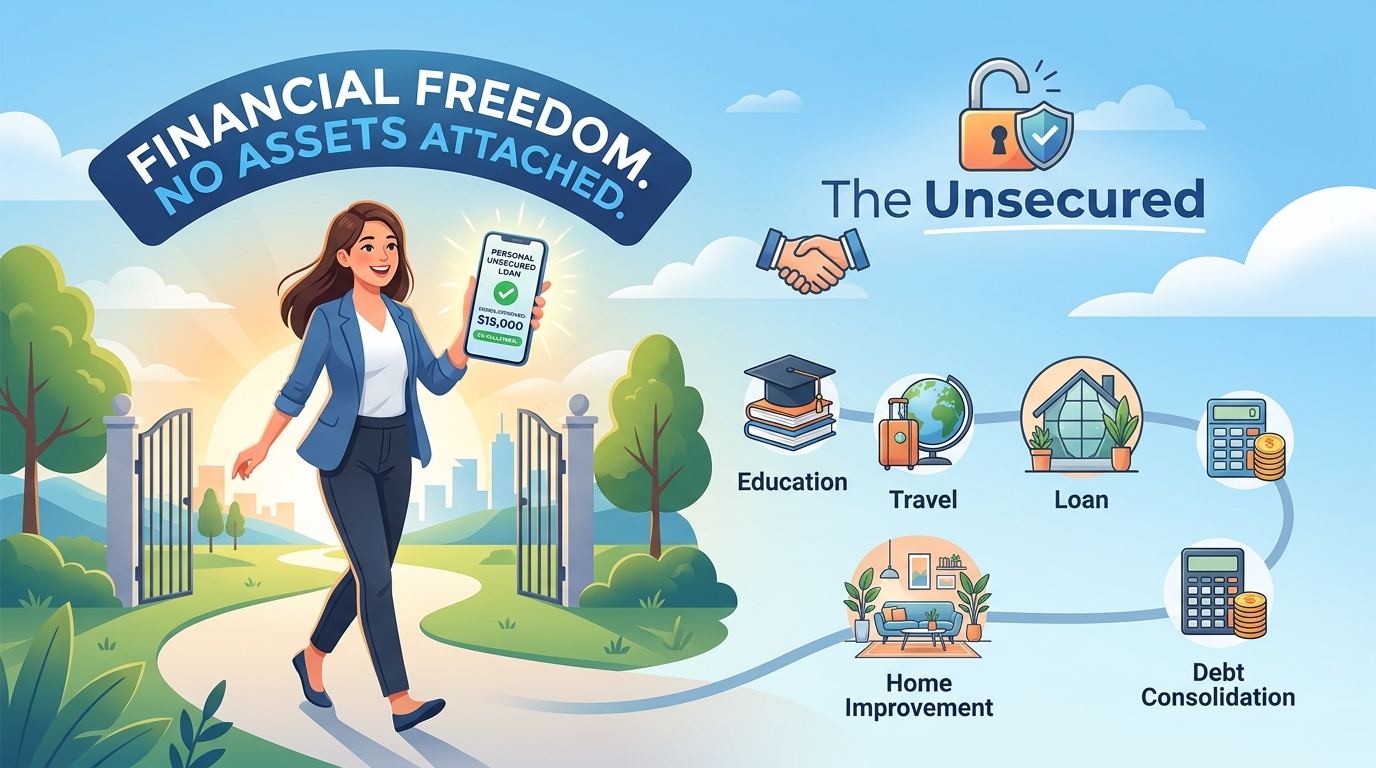
What is an unsecured personal loan? A personal unsecured loan is a flexible financing option where funds can be borrowed from a bank or financial institution for any purpose, without requiring the borrower to provide collateral such as a vehicle or property. Because it relies entirely on the borrower's creditworthiness, it offers a distinct, risk-free path for immediate funding.
Understanding the Basics of Unsecured Borrowing
A personal loan is considered to be the amount which could be taken from any bank or financial institution for any purpose. It is also known as unsecured loan as there is nothing to be kept for security such as vehicle, property or any other. This fundamental difference sets it apart from secured lending, placing it truly in a different league of financial products.
When you apply for an unsecured loan, lenders evaluate your credit history and income stability rather than evaluating the value of your assets. This means that your personal property is completely safe from the risk of repossession if you experience unforeseen financial hardship. This aspect provides an unparalleled peace of mind for borrowers seeking financial assistance during transitional periods.
Why Choose an Unsecured Personal Loan?
Choosing an unsecured loan comes with significant advantages. First and foremost is the speed of approval. Without the need for an asset appraisal process, lenders can often approve and disburse funds much faster. In emergency situations, this rapid access to cash is an invaluable lifeline.
Moreover, the versatility of these loans allows borrowers to use the funds for practically anything. Whether you are looking to consolidate high-interest credit card debt, finance a major home renovation, cover unexpected medical expenses, or even fund a dream wedding, an unsecured personal loan provides the necessary liquidity. Lenders generally do not monitor how you spend the funds, giving you total control over your financial strategy.
The Role of Credit Scores in Loan Approval
Because there is no collateral to secure the loan, a borrower's credit score plays a monumental role in both approval odds and the interest rates offered. A higher credit score signifies a history of responsible borrowing and timely repayments, which gives lenders the confidence to offer larger loan amounts at highly competitive annual percentage rates (APRs).
If you have an excellent credit score, you will likely find yourself accessing terms that make repayment highly manageable over terms ranging from 12 to 60 months. For those with less-than-perfect credit, unsecured loans are still available, though they may come with higher interest rates to offset the lender's increased risk. It is highly advisable to monitor your credit utilization and payment history for at least six months prior to submitting a loan application.
Steps to Securing Your Personal Loan
To successfully obtain an unsecured personal loan, you must take a strategic approach. Begin by reviewing your credit report to ensure there are no errors pulling your score down. Dispute any inaccuracies and pay down small balances if possible. Next, calculate exactly how much money you need and determine a monthly payment that comfortably fits into your budget.
It is crucial to compare offers from multiple lenders, including traditional banks, credit unions, and modern online lending platforms. Look beyond just the interest rate and carefully examine any origination fees, prepayment penalties, and late payment fees. Reading the fine print ensures you select the financial product that best aligns with your long-term economic stability. Prequalifying with several lenders can give you a realistic idea of your rates without harming your credit score.
Common Alternatives to Unsecured Loans
While an unsecured loan is often the optimal choice for many borrowers, it is wise to be aware of other financial instruments. If you own a home, a home equity line of credit (HELOC) might offer a lower interest rate, though it does put your property at risk. Alternatively, a low-interest credit card with an introductory 0% APR period can serve as a substitute for short-term borrowing needs. However, for sheer flexibility and safety of assets, the unsecured personal loan remains a cornerstone of consumer finance.
Frequently Asked Questions (FAQ)
What is an unsecured personal loan?
An unsecured personal loan is a form of credit provided by banks and financial institutions without requiring collateral like a home or vehicle.
Who is eligible for an unsecured personal loan?
Eligibility typically depends on a borrower's credit score, income history, and overall debt-to-income ratio.
How fast can I get funds from an unsecured loan?
Because there is no collateral to evaluate, funds can often be disbursed within one to three business days, depending on the lender.